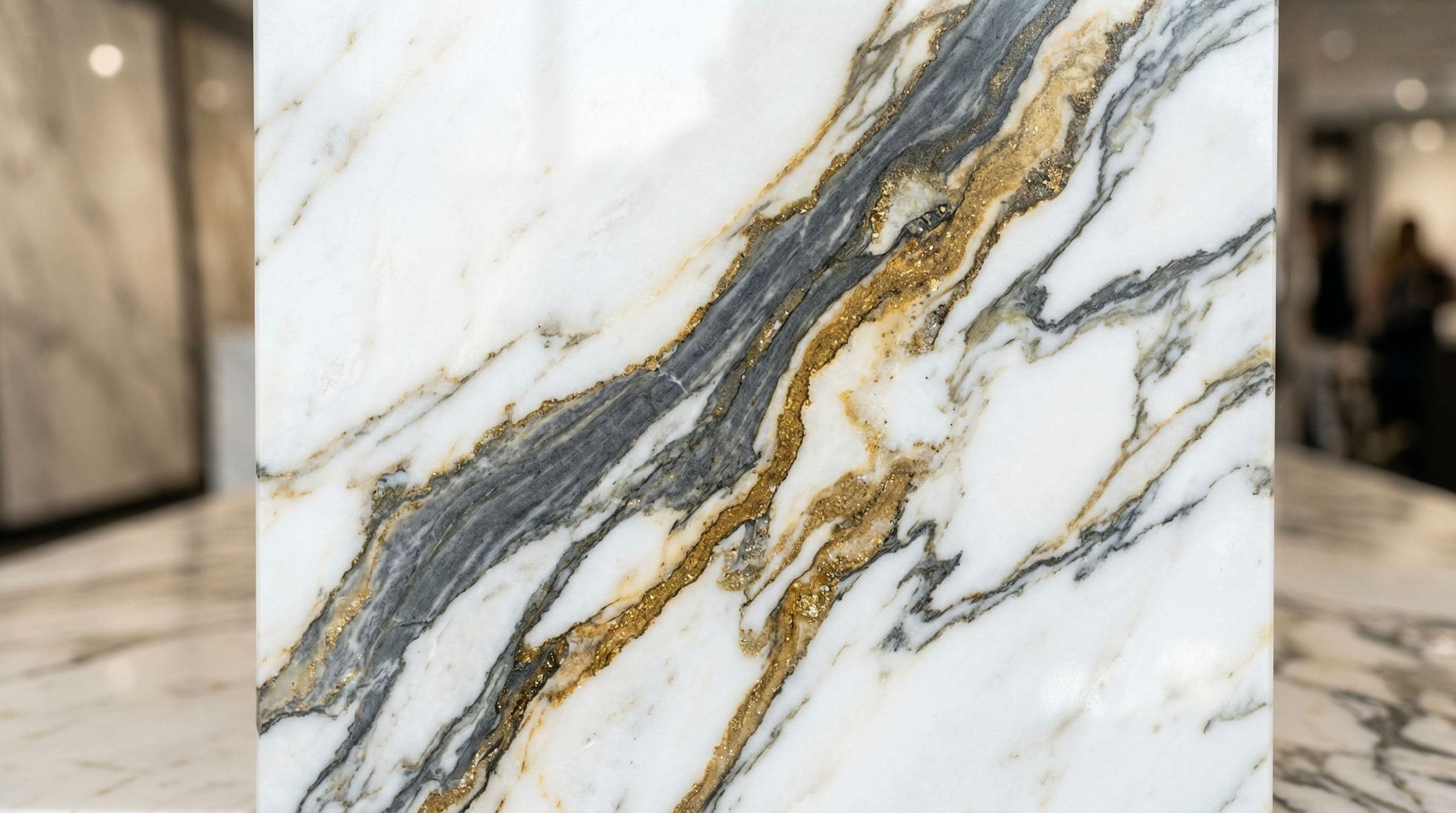
Walk into any tile showroom in New Jersey and you'll hear these two names tossed around like they're interchangeable. They're not. Calcutta (Calacatta) and Carrara come from the same region in Italy, Tuscany, but they're different stones with different characteristics, different price points, and different maintenance requirements.
The Visual Difference
Carrara has a softer, more uniform look. The veining is typically thin, gray, and subtle. It's the marble we see in most mid-range bathroom remodels: clean, classic, and relatively understated.
Calacatta is bolder. The veining is thicker, more dramatic, and often has gold or warm undertones running through it. It makes a statement. When someone walks into a bathroom and says "that's beautiful stone," they're usually looking at Calacatta.
Calacatta is also rarer, which means it costs more. Depending on the specific slab and supplier, you can expect to pay 40-60% more for Calacatta over Carrara. For a typical master bathroom with floor and shower tile, that difference can be $3,000-$8,000 in material costs alone.
Upkeep, and Which One to Choose
Both are natural marble. Both are porous. Both will etch if you leave acidic products sitting on them. The difference is that Calacatta's bold veining actually hides wear better than Carrara's uniform surface. A small etch mark on Carrara stands out. On Calacatta, it blends into the movement of the stone.
Either way, you're sealing it. We recommend sealing at installation and re-sealing every 12-18 months for shower applications. Floor marble in a bathroom gets sealed annually.
So which one? If you want clean and subtle, Carrara. If you want dramatic and bold, Calacatta. If budget is the deciding factor, Carrara gives you a beautiful marble bathroom at a lower price point. We don't call either one "better." They're different tools for different looks.
One more thing: there are excellent porcelain tiles that replicate both Calacatta and Carrara at a fraction of the cost and with zero maintenance. We install a lot of these, and in our experience most guests can't tell the difference. If you want the marble look without the marble upkeep, that's a real option worth considering.