Homeowners ask us this question constantly: "How long should my tile shower last?" The honest answer is that a properly installed tile shower should last 20 to 30 years before it needs a full rebuild. Some last longer. But the showers we get called to tear out? Most of them are under 10 years old. A few are under 5. The difference isn't the tile. It's everything behind it.
← Back to Journal
MaintenanceApril 13, 20266 min read
How Long Does a Tile Shower Last? (And What Makes It Fail Early)
How Long Does Tile Last on a Floor or Wall?
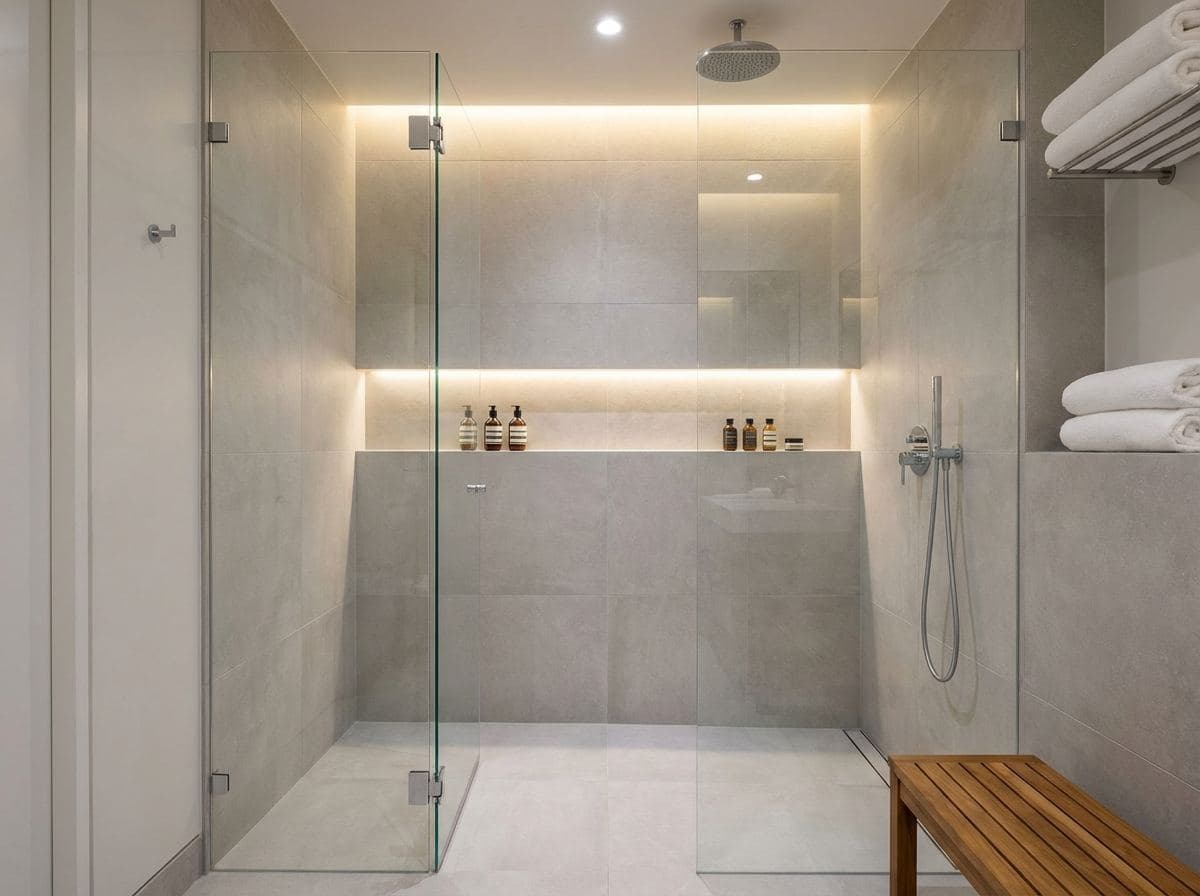
Short answer: the tile itself lasts for decades, in a shower or on a dry floor. Fired porcelain, ceramic, and natural stone do not wear out on a residential floor or wall; what wears out is the installation underneath and between them. On a dry floor or wall, where nothing attacks the thinset and grout except foot traffic and a mop, properly set tile is usually still sound when the room gets remodeled for other reasons. In a shower, where the whole assembly takes water every day, the realistic number is 20 to 30 years for a properly built installation, and a shower, almost never a dry hallway floor, is what we get called to tear out.
The same three things decide the lifespan of any tiled surface: waterproofing wherever water reaches it, a flat and rigid substrate, and the right thinset and grout for the tile and the room. A kitchen or entry floor skips the membrane entirely, so there is one less layer that can fail, which is why an old entry floor is often still tight while a much newer shower sounds hollow. Grout and caulk are the wear items on every tile job. Cement grout wants sealing every 2 to 3 years and caulk joints get replaced every 1 to 2 years; the tile they surround has no replacement interval at all. Rank the surfaces in your house by how wet they get and you have ranked them by how soon they will need us.
What Determines How Long a Tile Shower Lasts?
Three things control your shower's lifespan: waterproofing, substrate prep, and material selection. In that order. You can put $80-per-square-foot Calacatta marble on the walls, but if the waterproofing membrane behind it fails, you're tearing it all out in 5 years. We've seen it happen: beautiful stone, completely ruined because someone skipped the membrane or used the wrong one.
A proper waterproofing system (Schluter Kerdi, Laticrete Hydro Ban, or RedGard applied correctly) creates a continuous barrier between the water and the substrate. Every seam sealed, every corner treated, every penetration (shower valve, showerhead, niches) wrapped. This is the single most important step in a shower build, and it's the one most often cut short by contractors trying to save time.
Substrate matters too. Cement backer board (Hardiebacker, Durock) is the minimum. Regular drywall in a shower is a guaranteed failure, and yes, we still find it. The substrate needs to be flat, rigid, and properly fastened before any membrane or tile goes on.
Why Do Tile Showers Fail Early?
We wrote an entire post on why shower tile cracks and how to fix it, but here's the short version: water gets behind the tile. Once moisture reaches the substrate, the damage accelerates. The backer board swells. Thinset loses its bond. Grout cracks. Tiles sound hollow when you tap them. Mold starts growing behind the wall where you can't see it.
The most common causes of early failure:
- No waterproofing membrane, or a membrane that was applied incorrectly (gaps, missed corners, insufficient overlap at seams)
- Wrong substrate. Drywall or green board instead of cement backer board
- Bad slope on the shower floor. Water pools instead of draining, and standing water finds every weakness
- Incorrect thinset. Using mastic or the wrong thinset type for the tile size and application
- Skipped maintenance. Grout and caulk joints that are cracked for months, letting water in daily
If your shower was built by the lowest bidder and the estimate didn't mention waterproofing, substrate prep, or membrane systems, that's a shower with a 5-to-7-year clock on it.
How Do You Know If Your Shower Is Starting to Fail?
Catch it early and you might save the shower with a partial repair. Miss the signs and you're looking at a full tear-out, $8,000 to $18,000 depending on the scope (here's our full breakdown of bathroom remodel costs in NJ). Homeowners weighing whether the rebuild should even come back as tile at all, versus an acrylic surround, should read our tile shower vs acrylic surround Shore-2026 breakdown first: the answer depends on how long you plan to own the house, and both options have a real lane.
Warning signs, in order of severity:
- Grout cracking repeatedly. You re-grout, it cracks again within months. That means movement behind the tile.
- Caulk pulling away. Especially at corners and where tile meets the tub or shower pan.
- Hollow-sounding tiles. Tap with your knuckle. A solid tile sounds solid. A tile losing its bond sounds hollow and thin (here's what hollow sounding tile actually means).
- Discoloration or dark spots. Moisture trapped behind the tile shows through, especially on lighter grout.
- Musty smell. Mold growing behind the wall. By the time you smell it, it's been there a while.
- Soft or spongy wall. Press on the tile. If the wall gives, the substrate is compromised. This is urgent.
What Does Proper Maintenance Look Like?
A well-built shower still needs basic maintenance to hit that 20-to-30-year lifespan, and we walk through the full week-to-week routine in how to take care of a tile shower. The short version:
- Re-caulk every 1-2 years. All joints where tile meets a different surface (pan, glass, fixtures). Caulk is a sacrificial seal. It's meant to be replaced.
- Seal grout every 2-3 years. Standard cement grout is porous. Sealer keeps water from penetrating. Epoxy grout doesn't need sealing, but it costs more up front.
- Fix cracked grout immediately. Don't let it sit for months. One cracked grout line is a repair. Six months of water behind the tile is a rebuild.
- Ventilate. Run the bathroom exhaust fan during and 20 minutes after every shower. Humidity is the slow killer.
Homeowners across Toms River, Brick, and the rest of Monmouth and Ocean County deal with coastal humidity that accelerates wear on grout and caulk joints. If you're near the shore, shorten those maintenance intervals.
When Is It Time to Replace Instead of Repair?
If the damage is limited to a few tiles and the substrate behind them is solid and dry, a repair makes sense. We can pull the affected tiles, assess the membrane and backer board, patch if needed, and re-tile the section. Cost: $800 to $2,500 depending on scope.
If the substrate is soft, if there's mold behind the wall, or if multiple areas are failing, it's time for a full tear-out and rebuild. Patching a structurally compromised shower is throwing money at a problem that will come back. A proper rebuild with correct waterproofing resets the clock for another 25+ years.
Ready to Have Your Shower Assessed?
If your shower is showing any of the warning signs above, don't wait for it to get worse. Water damage behind tile accelerates. What's a repair today could be a full rebuild in six months. JL Tile & Stone provides free estimates and honest assessments throughout Monmouth and Ocean County. Call Jesse directly at (848) 210-1946 or visit our website to schedule.
Have a Question About Your Project?
We give honest answers — no pressure, no sales pitch.
Get a Free Estimate