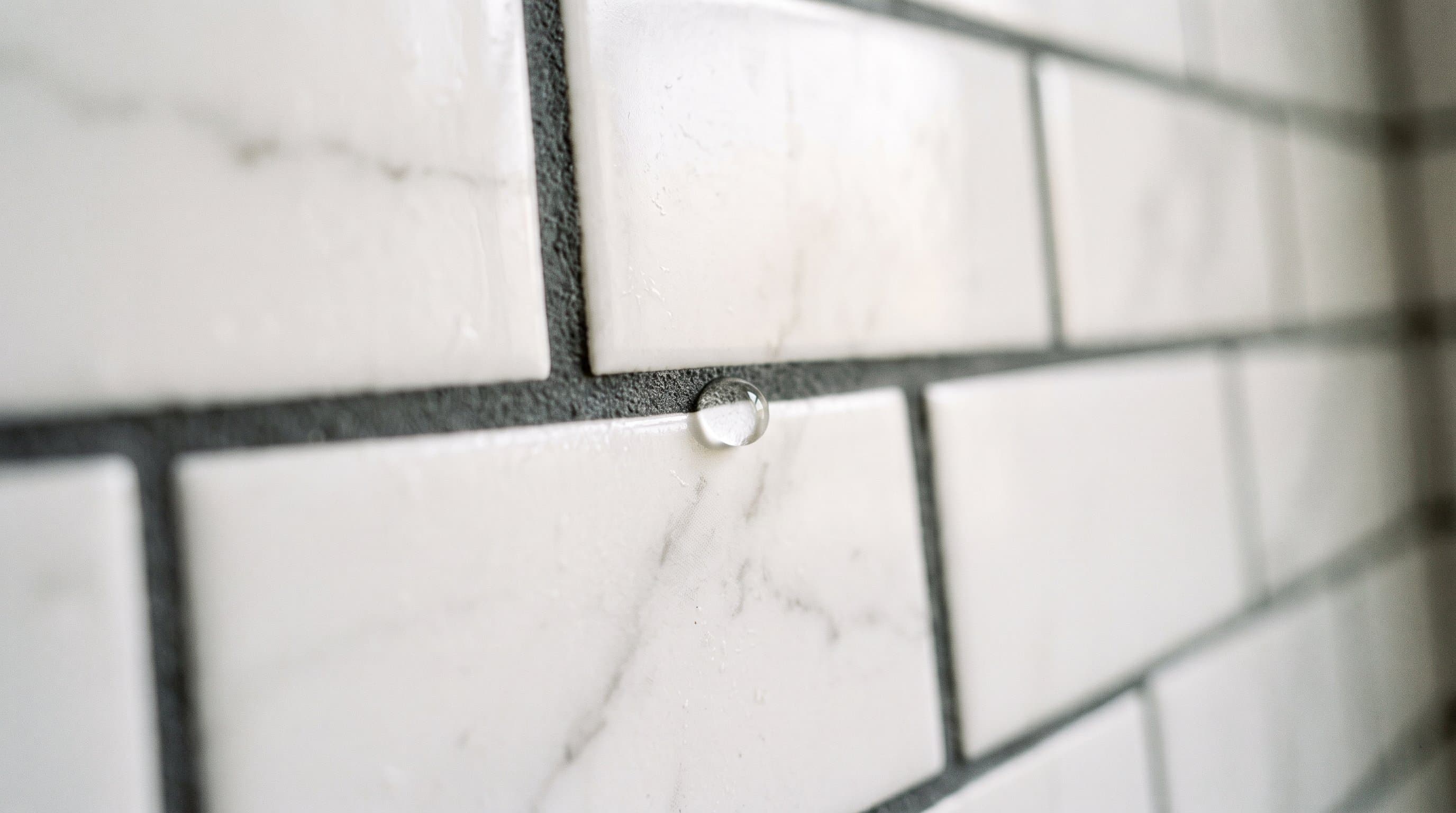
Short answer: for a shower, epoxy grout wins. It is non-porous, waterproof, and never needs sealing, while cement grout stays porous and needs resealing every 1 to 2 years on a wet Shore bathroom. Epoxy grout vs cement grout runs about $2 to $4 more per square foot installed. Updated October 2026.
Every bathroom remodel we quote in Monmouth and Ocean County lands on the same fork in the road once the tile is picked: epoxy grout or cement grout. The showroom pushes whatever is on the shelf. The cheap crew defaults to cement because it is forgiving and they can wipe it late. We have torn out both kinds, so what follows is the breakdown we give at the kitchen table: which grout belongs in a Jersey Shore shower, and the one place cement still earns its spot.
Quick context before the detail. Grout is not glue and it is not waterproofing. The membrane behind the tile stops water. Grout fills the joints and takes the daily beating of shower water, soap film, and scrubbing. Choosing the right one matters most when you are regrouting a shower and putting new grout back in the joint. The real question is which grout survives that beating in a room that is wet half the year.
Is Epoxy Grout Good for a Shower?
Yes. Epoxy grout is the right grout for a shower, and it is what goes into the wet zone of nearly every shower we build in Monmouth and Ocean County. Against regular cement grout the case is short: epoxy is non-porous, so shower water, soap film, and body oil sit on the surface of the joint instead of soaking into it; it never needs a sealer; it keeps its color; and it lasts the life of the tile, where cement grout in a shower is usually ready for a regrout in 7 to 10 years. What it asks of you is roughly $2 to $4 more per square foot and an installer who respects its 45 to 75 minute working window. If the room is a shower, pay it. If the room stays dry, regular grout is fine and we will tell you so.
Epoxy Grout vs Cement Grout in a Shower: What's the Real Difference?
The real difference is porosity: epoxy grout is a non-porous resin that water cannot penetrate, and cement grout is a porous mineral mix that soaks up water unless it is sealed and re-sealed on schedule. Everything else, stain resistance, mildew, maintenance, and cost, falls out of that one fact. Cement grout is Portland cement, sand, and additives. Epoxy grout is a two-part resin and hardener with a fine filler. Cement cures by drying and stays microscopically open. Epoxy cures by chemical reaction into a solid, waterproof joint that shrugs off the exact conditions that destroy cement in a shower.
Why Does Cement Grout Fail in a Shower?
Cement grout fails in a shower because it is porous, and a shower is the wettest surface in the house. Water wicks into the joint, carries soap scum and body oil with it, and feeds mildew in the pores where a brush cannot reach. Seal it and you slow that down, but sealer is sacrificial and wears off in 1 to 2 years, faster on a shower floor that gets scrubbed. Miss one reseal cycle and the grout starts drinking water again.
On the Shore it shows up sooner. A summer home in Lavallette or Point Pleasant that sits closed from October to April rides months of temperature and humidity swings with nobody refreshing the sealer, and the floor joints darken, crumble, and grow mildew that no cleaner fully lifts. The signs that cement grout is losing the fight:
- Grout lines that go dark and stay dark even after a deep clean.
- A powdery, sandy residue at the base of the joint where the grout is breaking down.
- Mildew that returns in the same spots within a week of scrubbing.
- A musty smell that never fully clears even with the exhaust fan running.
If your shower is already showing these, the problem may run deeper than the grout. Recurring cracks and hollow tiles usually trace back to failed waterproofing, which we break down in why your shower tile is cracking.
Where Does Epoxy Grout Win?
Epoxy grout wins everywhere a shower is hardest on a joint: it is waterproof, stain-proof, mildew-resistant, and it never needs sealing. Because the cured resin is non-porous, water and soap film sit on top of the joint instead of soaking in, so it does not darken, it does not feed mildew inside the pore structure, and it holds its color for the life of the shower. No annual sealer, no reseal every two years, no slow crumble at the floor. On a Shore bathroom that is the whole ballgame: the maintenance step cement grout demands, and that homeowners always skip, simply does not exist with epoxy.
Where epoxy costs you is up front, in dollars and in the skill it takes to install correctly. That is the honest tradeoff, and it is the next two sections.
The catch nobody mentions is that epoxy sets fast and hard, and it punishes a slow or inexperienced installer. A batch of epoxy grout has a working window of roughly 45 to 75 minutes, depending on the temperature of the room, before it turns to concrete in the bucket. Miss that window and the haze locks onto the face of the tile permanently. Cement grout forgives a slow hand: you can wipe it late, mix another batch, take a phone call. Epoxy does not. It has to be spread, packed, and cleaned off the tile face in one continuous, disciplined pass, with a second and third wipe using the right sponge and clean water while the resin is still open. A crew that grouts a shower in epoxy the way they grout in cement will leave you a hazed, sticky, ruined tile face. This is the single biggest reason epoxy has a rough reputation with homeowners who tried it themselves or hired the low bid: the product is excellent and the install is unforgiving. It is not the material that fails, it is the working window nobody respected. This is exactly where a real installer beats a DIYer or a cheap crew.
What Does Epoxy Grout Actually Cost vs Cement Over Time?
Epoxy grout costs about $2 to $4 more per square foot installed than cement in Monmouth and Ocean County, which on an average 60-square-foot shower adds roughly $150 to $300 to the job. That is the entire price difference, and it is a one-time cost. Cement grout is cheaper on day one and then charges you back over the life of the shower in sealer, labor, and eventually a regrout. Here is the honest side-by-side.
| Factor | Cement grout | Epoxy grout |
|---|---|---|
| Installed cost (shower) | Baseline | +$2 to $4 per sq ft (about $150 to $300 more) |
| Porosity | Porous, absorbs water | Non-porous, waterproof |
| Needs sealing | Yes, every 1 to 2 years | Never |
| Stain resistance | Low, darkens over time | High, holds color |
| Mildew resistance | Low in wet areas | High |
| Working time for installer | Forgiving, can wipe late | 45 to 75 minutes, unforgiving |
| Repairability | Easy to patch and match | Harder to patch |
| Expected life in a shower | 7 to 10 years before regrout | 20+ years, life of the tile |
| Best fit | Dry walls, backsplash, budget jobs | Shower floors, wet walls, Shore bathrooms |
Run the math over ten years and the gap closes or flips. Cement grout in a shower wants a fresh penetrating sealer every 1 to 2 years, and somewhere around year seven to ten a cement-grouted shower floor usually needs a regrout as the joints break down. Epoxy asks for nothing but normal cleaning. The $150 to $300 you spend up front on epoxy buys you out of a decade of sealer cans, weekend maintenance, and a regrout that costs more than the upgrade did. For the full scope of what a shower build and bathroom remodel involves at the Shore, see our bathroom remodel and shower build service.
When Does Cement Grout Still Make Sense?
Cement grout still makes sense on dry or low-moisture surfaces, and where easy repair matters more than waterproofing: a kitchen backsplash, a powder-room wall, a fireplace surround, a laundry-room floor, or any job where the budget is tight and the area never gets soaked. In those spots the porosity is a non-issue and cement's two real advantages, lower cost and easy patching, actually count. Cement grout also takes a wider range of joint widths and is simpler to color-match on a future repair.
Where it stops making sense is a Shore bathroom shower. A shower floor sees standing water every day, a wet wall sees it most of the day, and a seasonal coastal home compounds every weakness cement grout has. That is the one case where we steer nearly every client to epoxy. If you are still weighing whether to rebuild in tile at all, our tile shower vs acrylic surround breakdown covers that decision. And because epoxy comes in fewer shades than cement, we factor that into how to choose the right grout color.
How Does JL Tile & Stone Grout a Shore Shower?
We grout the wet zones of a Shore shower in epoxy and the change-of-plane corners in color-matched silicone, never in grout. Jesse has been setting tile in Monmouth and Ocean County for over 30 years, and the shower protocol is the same on every job: full waterproofing membrane behind the tile first (Schluter Kerdi, Laticrete Hydro Ban, or RedGard), epoxy grout packed into the field joints in disciplined batches inside the working window, and flexible silicone at every floor-to-wall and wall-to-wall corner because those joints move and rigid grout cracks there. That last detail is where most shower grout fails first, and it is a caulk job, not a grout job.
The order of work below is why a shower we grout in epoxy lasts:
- Waterproof the substrate with a bonded membrane, sealed at every seam, corner, and penetration.
- Set the tile with full mortar coverage so there are no hollow spots under the joints.
- Grout the field in epoxy, one controlled batch at a time, cleaned off the tile face in the same pass.
- Silicone every change-of-plane corner in a matching color instead of grouting it.
- Final clean and a walkthrough so you know exactly what you have and how to keep it.
Frequently Asked Questions
- Is epoxy grout worth it in a shower?
Yes. For a shower, epoxy is worth the extra $2 to $4 per square foot. Because the cured resin takes on no water there is nothing to seal, and the joint does not darken or feed mildew the way cement grout does in a wet room. On a Jersey Shore bathroom, where seasonal homes miss reseal cycles, epoxy is the grout that actually survives.
- Does epoxy grout really never need sealing?
Correct, epoxy grout never needs sealing. It is a non-porous cured resin, so there is nothing for a sealer to penetrate. That is the opposite of cement grout, which needs a fresh penetrating sealer every 1 to 2 years to stay water-resistant, and sooner on a scrubbed shower floor.
- Why is epoxy grout harder to install than cement?
Epoxy grout is harder to install because it sets fast and cleans up unforgivingly, with a working window of only about 45 to 75 minutes before it hardens. It has to be packed and wiped off the tile face in one disciplined pass, and a crew that treats it like cement will leave a permanent haze on the tile. This is why the installer matters more with epoxy than with any other grout.
- How much more does epoxy grout cost than cement in NJ?
In Monmouth and Ocean County, epoxy grout adds roughly $2 to $4 per square foot to a shower install, or about $150 to $300 on an average 60-square-foot shower. It is a one-time cost that buys you out of a decade of sealer and eventually a regrout, so over ten years it usually costs the same or less than cement.
- Can you put epoxy grout over existing cement grout?
No, you cannot reliably grout epoxy over old cement grout. The cement has to be raked out to a proper depth first so the epoxy has room to bond and fill the joint. Skipping that step traps a weak, absorbent layer under the epoxy and defeats the point. For a shower it is cleaner to plan epoxy in from the start of the tile job.
- Is epoxy grout good for a shower floor specifically?
Yes, the shower floor is exactly where epoxy earns its cost. The floor holds standing water and gets scrubbed hardest, which is where cement grout darkens, crumbles, and grows mildew first. Epoxy on the floor stays waterproof and holds its color, and we pair it with small-format tile so the slope and drainage still work.
Epoxy in the Wet Zone, Cement Where It Stays Dry
For a shower on the Jersey Shore, epoxy grout is the right call almost every time. It costs a little more up front, it demands a real installer, and it rewards you with a joint that stays waterproof and clean for the life of the tile with zero sealing. Cement grout keeps its place on dry walls, backsplashes, and budget jobs, but a wet Shore bathroom is not that job. If you are planning a shower or bathroom remodel in Monmouth or Ocean County and want it grouted to last, call or text JL Tile & Stone at (848) 210-1946, or request a free tile quote and we will walk your space, name the exact waterproofing and grout we would use, and give you an honest number. Serving Monmouth and Ocean County only, from Rumson and Red Bank down through Point Pleasant and Toms River.