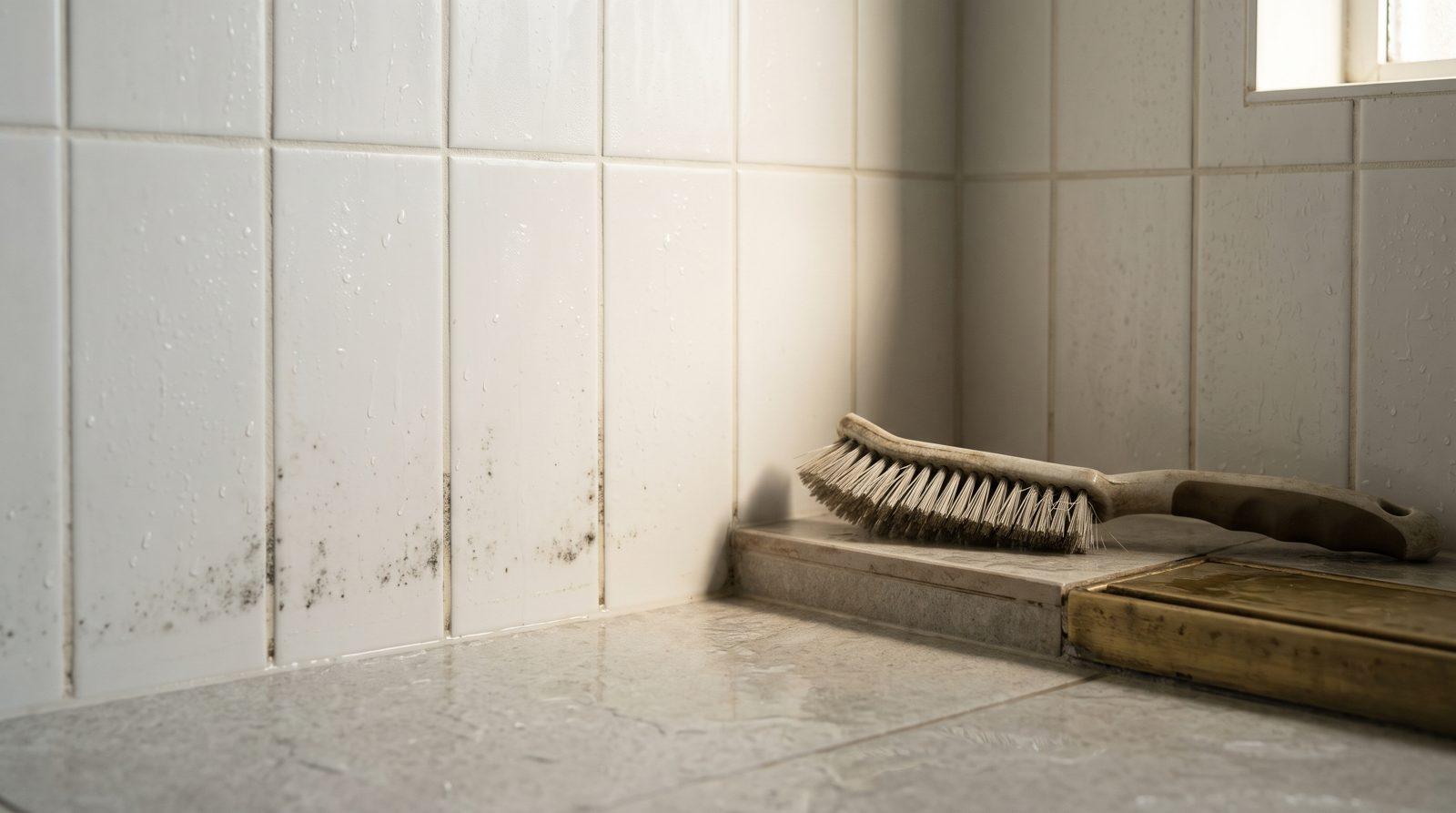
Mold in shower grout is usually a surface problem, and you can get it out yourself with an oxygen bleach paste, a stiff nylon brush and about 20 minutes of dwell time. Here's how to remove mold from shower grout properly. The part that matters more is what happens next: if the black spots are back in the same joints within a week or two, or the grout is soft enough to scratch out with a fingernail, the mold isn't the problem anymore. Water is getting into the joint and staying there, and no cleaner fixes that.
Updated November 2026.
We got reminded of how common this is reading a homeowner thread this month. Light grout on a bathroom floor, four years old, staining almost from the start, and the owner asking whether all of it had to come out. A lot of the time the honest answer is no. Sometimes it's yes. The difference is easy to see once you know where to look.
Is it serious?
Start with where the mold is, because that tells you more than how dark it is.
Spotting spread lightly across the wall joints, worst at the height where the spray hits, is almost always soap film and body oil that mold is living on. That's a cleaning job. Mold concentrated in the bottom two or three rows, along the line where the wall meets the floor, or around the niche and the valve, is different. Those are the places water sits. If the grout in those spots is also darker when it's dry, powdery, or cracked, the joint is holding water, and the wall behind it may be too.
Three things move it from a cleaning job to a call to us: grout you can dig out with a key, a tile that sounds hollow or moves when you press it, and a musty smell that doesn't clear after the bathroom airs out.
How to clean it without wrecking the grout
Cement grout is porous, so the goal is to lift what's in the pores without eating the grout itself.
Mix powdered oxygen bleach with warm water into a paste and work it into the joints. Let it sit 15 to 20 minutes and keep it wet. Scrub along the joint with a stiff nylon grout brush, rinse well, and then do the part everyone skips: dry the shower. Squeegee the walls, run the fan, leave the door open. Mold that has a damp joint to come back to will be back.
Chlorine bleach works on a stubborn spot now and then. We wouldn't make it the routine, because it's hard on grout sealer over time. Skip acid cleaners and vinegar on cement grout altogether, since acid dissolves the grout a little more with every pass, and skip wire brushes, which chew up the joint and scratch glazed tile. If you've got natural stone in the shower, check with whoever installed it before you put anything on it.
Keeping it out
Once the grout is clean and fully dry, seal it. On our installs, grout gets 24 hours to cure before it's sealed, and a cleaned joint needs to be just as dry, which means at least a day with the shower out of use. Sealer slows water down. It doesn't make cement grout waterproof, and it wears, so plan on doing it again. The guide on sealing grout goes through when it's worth it.
The other half is habit. A shower that gets squeegeed and vented after use rarely grows much. One that stays wet all day will grow it on the best grout made. For a new shower floor, epoxy grout takes on no water, so there's nothing in the joint for mold to feed on. Our epoxy vs. cement grout comparison covers the tradeoff.
When it's time to regrout, or more
If the same joints darken again within days of a good cleaning and a dry week, the grout is saturated or failing, and the fix is to cut it out and regrout. That has to be done to depth, which is why grouting over the top of moldy grout never lasts. We walk through what comes out in our post on regrouting a shower.
Here's our opinion, and it's the thing we'd tell anyone standing in their shower with a brush: grout and tile joints aren't waterproof, and they were never supposed to be. In the showers we build, the waterproofing is a membrane on the wall before any tile goes up, Schluter-KERDI or Laticrete HydroBan, sealed at every seam, corner and penetration. Grout that stays wet can be cleaned forever. If the shower behind it has no membrane, or a failed one, the mold in the grout is just the part you can see.
If you're seeing soft grout, a hollow tile or that smell, have someone look before you regrout. We do that on bathroom remodels across Monmouth and Ocean County, and it's a short visit to tell you which job you've actually got.