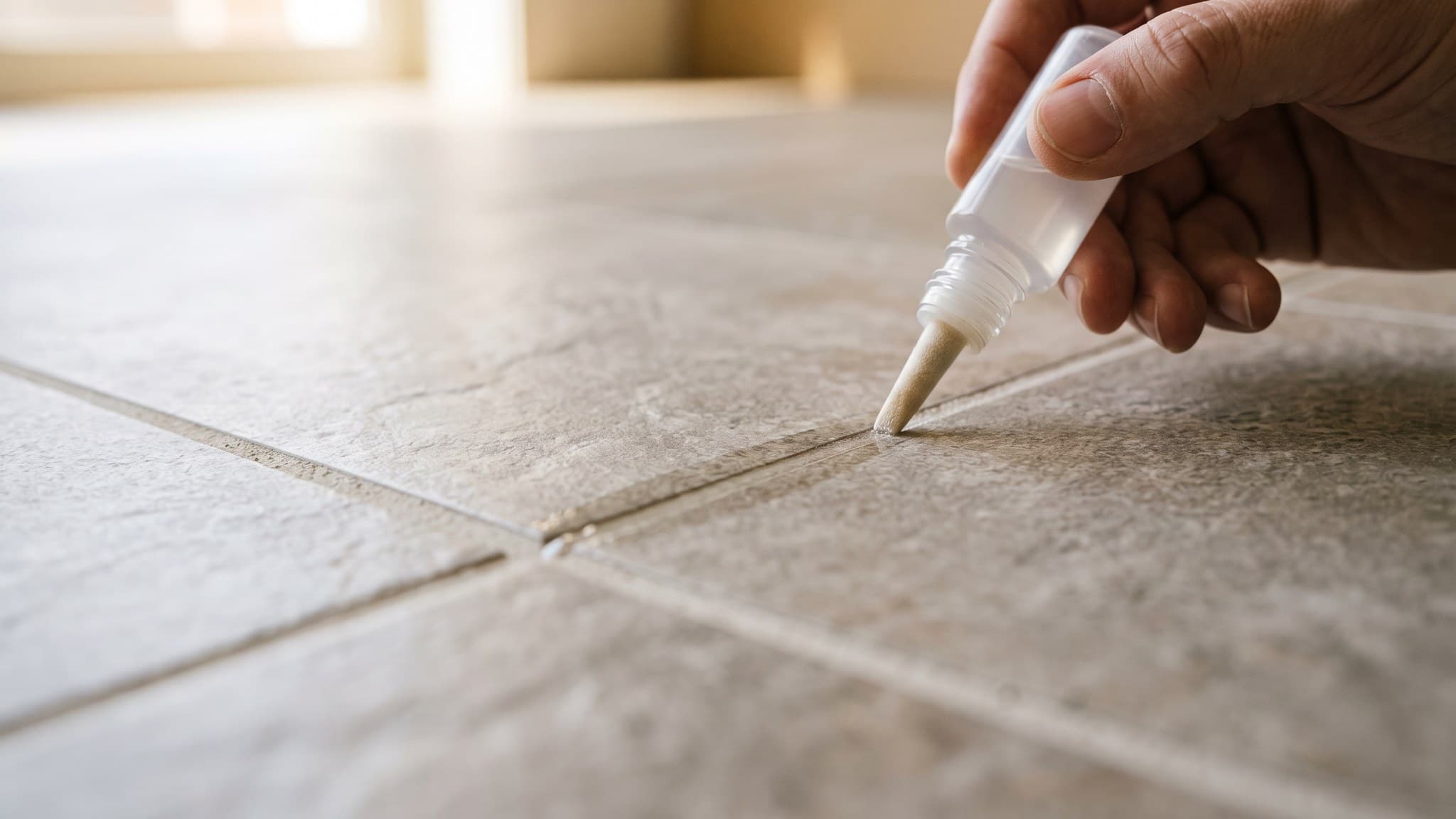
Short answer: yes, if you have cement grout, but not yet. New cement grout has to cure before anything goes on it, and most manufacturers put that at 48 to 72 hours, with the bag being the authority over any rule of thumb. If you have epoxy grout, you do not seal it at all. And if you have natural stone, the important sealing already happened, or should have, before the grout ever went in. Updated September 2026.
This question usually arrives at one of two moments. Either the tile went in last week and you want to know what you are supposed to do now, or you are reading a quote and trying to work out whether "seal grout" is a line you are already paying for. Both are fair, and the answers are different depending on what is actually on your floor.
Wait for the Cure, Not the Dry
Grout that feels dry is not grout that has cured. Cement grout stiffens in a few hours and keeps chemically curing for days after that, and a sealer applied too early traps moisture in the joint and can leave you with a cloudy, blotchy line that has to come back out.
Most cement grout manufacturers call for 48 to 72 hours before sealing. In a bathroom with no ventilation, or on a Shore job in a humid stretch of August, we give it longer. There is no upside to rushing it. The joint is not vulnerable in those first few days the way people imagine, as long as you keep it dry and stay off it.
So if an installer offers to grout on Tuesday and seal on Tuesday, that tells you something about the rest of the work.
Epoxy Grout Changes the Whole Answer
Epoxy grout does not get sealed. It is not porous, so there is nothing for a sealer to soak into, and putting one on top just leaves a film that will wear off unevenly.
This is worth knowing before the grout is chosen rather than after, because it turns a recurring chore into a non-issue. If you are still deciding, we put the tradeoffs side by side in epoxy versus cement grout and in the broader guide to picking a grout type. Epoxy costs more to install and it is less forgiving to work with, which is the honest counterweight.
Cement grout is porous, and porous means it drinks. That is the entire reason sealer exists.
Natural Stone Gets Sealed Before the Grout, Not After
This is the part that gets missed, and it is the one that is expensive to fix.
If your tile is marble, limestone, travertine, slate or any other natural stone, the stone itself is porous, not just the joint. Cement grout dragged across unsealed stone will stain it, and a dark grout on a light stone can leave a permanent haze that no amount of cleaning takes back out. The fix is a sealer applied to the stone before grouting, so the grout releases cleanly off the face.
Then the joints get sealed after the cure, same as anywhere else. So stone is a two-stage job, and if a quote for a marble floor only mentions sealing once, ask which stage it means.
Porcelain and glazed ceramic do not need this. The face is already impervious. Only the grout lines are in play, which is why most bathroom and backsplash jobs are the simple version of this question.
Is Sealing Included in the Installation Price?
Sometimes, and it is worth asking outright rather than assuming either way.
There is a practical reason it often is not. The cure window means sealing is a separate trip, usually several days after the crew has finished and cleaned up. An installer who is already off your job and onto the next one has to come back for a 30 minute task, so some build it in, some price it as a small add, and some hand you the bottle and tell you how to do it.
None of those is wrong. What causes the friction is when nobody says which one it is, the homeowner assumes it was included, and the grout goes unsealed for a year. So when you are reading a quote, get three things answered in writing: whether sealing is in the price, who is coming back to do it, and roughly when.
If you are vetting installers more broadly, our notes on how to hire a tile installer in NJ cover the rest of what belongs in a written scope.
What a Sealer Actually Buys You
Set expectations correctly here, because sealer is oversold constantly.
A sealer buys you time to wipe something up. It does not make the joint waterproof, and anyone telling you otherwise is selling sealer. Waterproofing is the membrane behind the tile, and it was decided long before grout day. A sealed grout line will hold a spilled glass of red wine or a splash of coffee on the surface long enough for you to get to it, and that is the honest scope of the benefit.
It also does nothing structurally. It will not stop a cracking joint, it will not fix movement, and it will not hold back a leak. If the joint is failing, sealing it just puts a coat over the symptom.
After That, It Is a Routine
Once the first seal is on, cement grout at the Shore wants resealing on roughly a 12 month interval, and there is a 10 second test that tells you whether you are due. We walk through the test, the cleaners that quietly destroy a seal, and the rest of the upkeep in how to maintain a tile shower, so this post will not repeat it.
The short version for a brand new installation: let it cure, seal it once it has, and then put a reminder in your phone for next fall.
If you are mid-project in Monmouth or Ocean County and not sure what is on your floor or what your quote covers, tell us what you are working with and we will tell you straight.